Complicated Surgical Wounds

Clinical evidence and case reports on the use of Abilar® wound balm in post-operative and complicated surgical wounds.

Clinical Study

A pilot clinical trial evaluated Abilar® 10% resin salve in 23 patients with chronic, complicated surgical wounds that had failed to heal by primary intent. Patients applied the salve as at-home care, and wound progress was measured by wound care experts every two weeks. The study monitored wound size (length, width, depth), area, and infection status through microbial cultures.

Key Findings

100% of the wounds achieved complete healing within an average treatment period of 43 ± 24 days (range: 10–87 days). A significant observation for clinical practice was that positive bacterial cultures at the start of treatment did not significantly prolong the healing time, which researchers attributed to the salve's ability to disinfect wounds and disperse microbial biofilms.
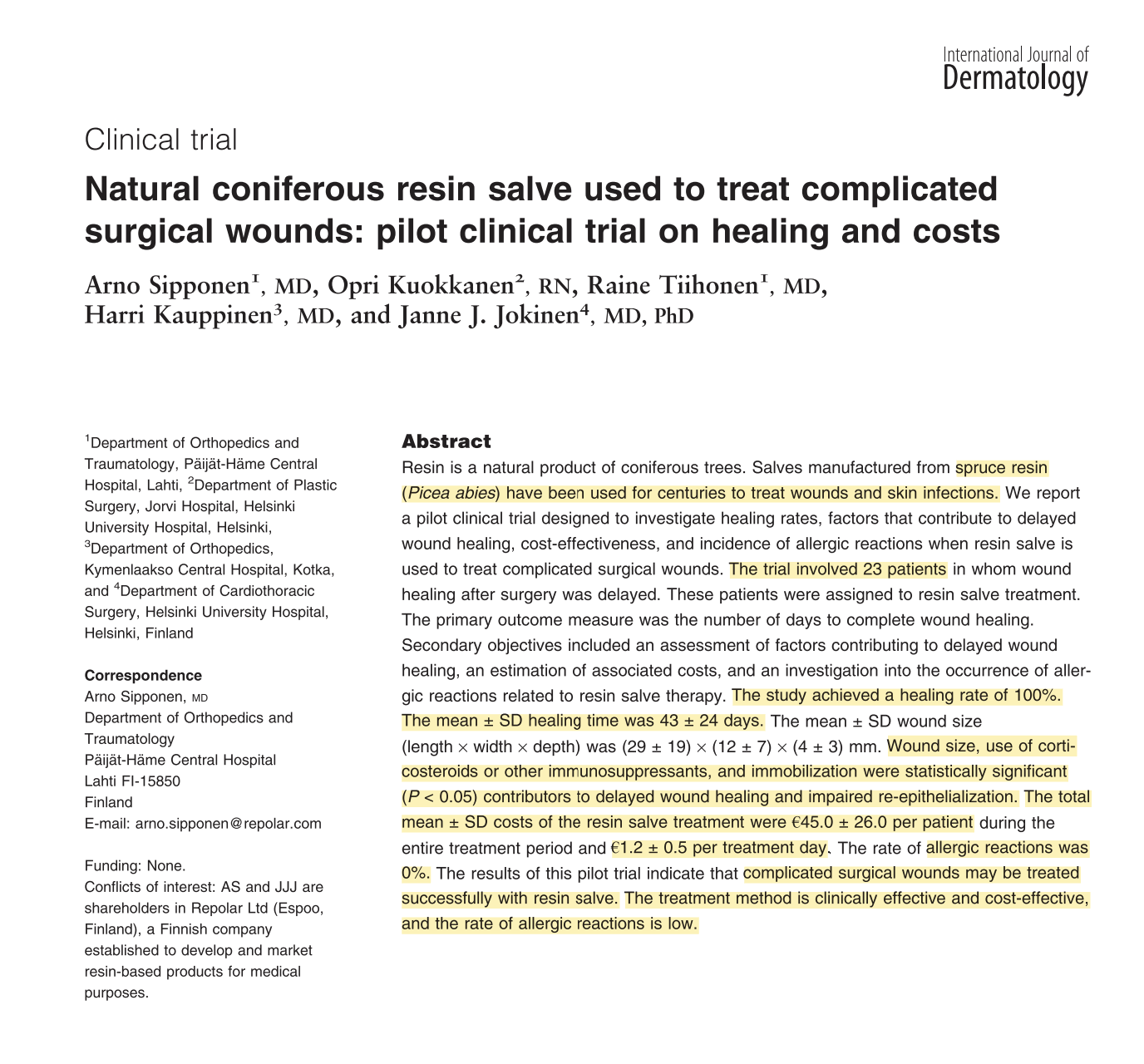
Journal article cover — Natural coniferous resin salve used to treat complicated surgical wounds

Reference

Sipponen A, Kuokkanen O, Tiihonen R, Kauppinen H, Jokinen JJ. Natural coniferous resin salve used to treat complicated surgical wounds: Pilot clinical trial on healing and costs. Int J Dermatol. 2012;51(6):726–32. doi:10.1111/j.1365-4632.2011.05397.x PubMed PMID: 22607295.

Back to study
Case Studies

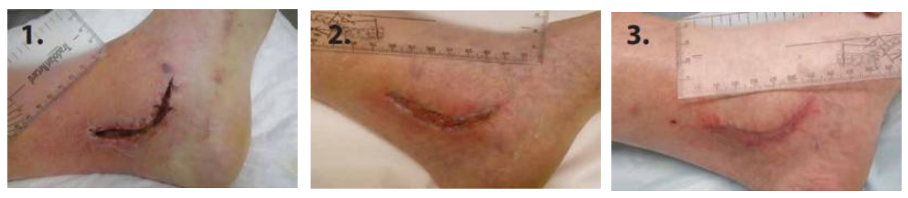
Case 1

Male 55 years old with lateral malleolus fracture. The patient underwent plate removal due to a wound infection. Abilar® Wound Balm treatment was initiated 3 months later and salve was applied once a day. The wound was completely healed after 109 days of Abilar® Wound Balm treatment.

Complicated surgical wound before Abilar® treatment, 1 month progress, and 3 months after complete healing

Complicated surgical wound before Abilar® treatment, 1 month progress, and 3 months after complete healing.

Reference Non-public

Case 2

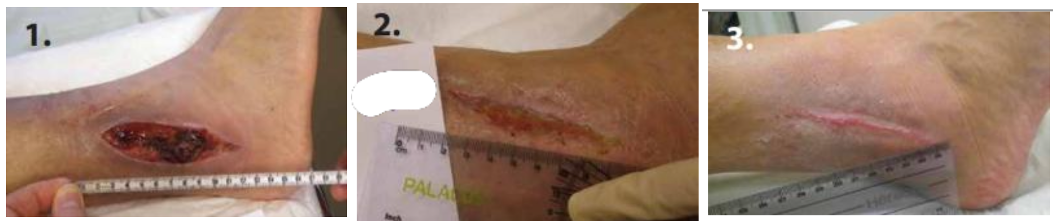
Male 63 years old with a wound infection after surgical treatment of tibialis posterior tendon (tenosynovectomy). Wound infection was diagnosed 11 days after surgery. Abilar® Wound Balm treatment was initiated immediately, and salve was applied once a day. The wound and infection were completely healed after 70 days.

Complicated surgical wound before Abilar® treatment, 1 month progress, and 2 months after complete healing

Complicated surgical wound before Abilar® treatment, 1 month progress, and 2 months after complete healing.

Reference Non-public

Case 3

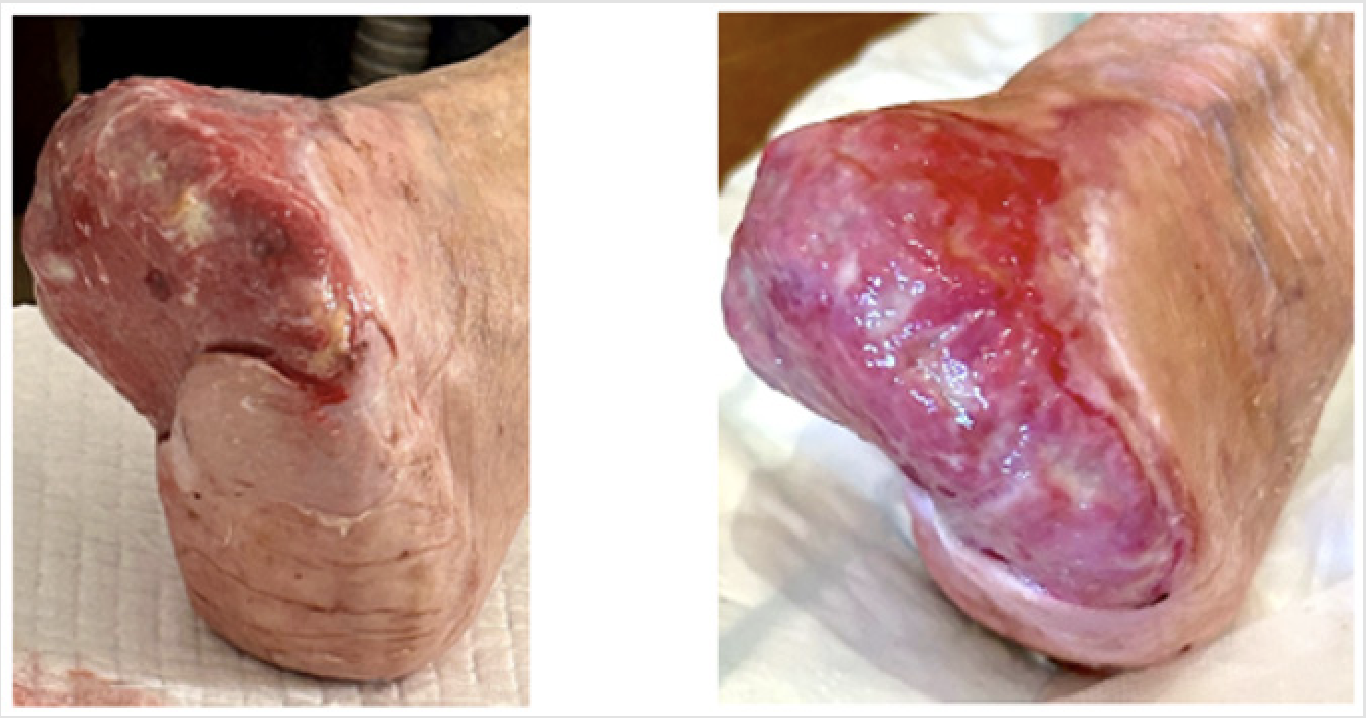
The 70-year-old female patient underwent left iliofemoral reconstruction surgery due to gangrene of the toe. Distal extension was not an option due to severe damage to the leg arteries. Forefoot amputation was performed due to progressive gangrene. After her emission, she used physical vascular therapy (BEMER®), which achieved bone coverage with granulation tissue in two months. Her treatment was supplemented with Abilar® to promote the wound exfoliation for one month.

Forefoot amputation wound due to arterial occlusion and gangrene, and 1 month later

Forefoot amputation wound due to arterial occlusion and gangrene, and 1 month later.

Reference Tímea Hevér. Initial Experience with Norway Spruce (Picea Abies) Resin. Biomed J Sci & Tech Res. 2024;57(4). doi:10.26717/BJSTR.2024.57.009043

Case 4

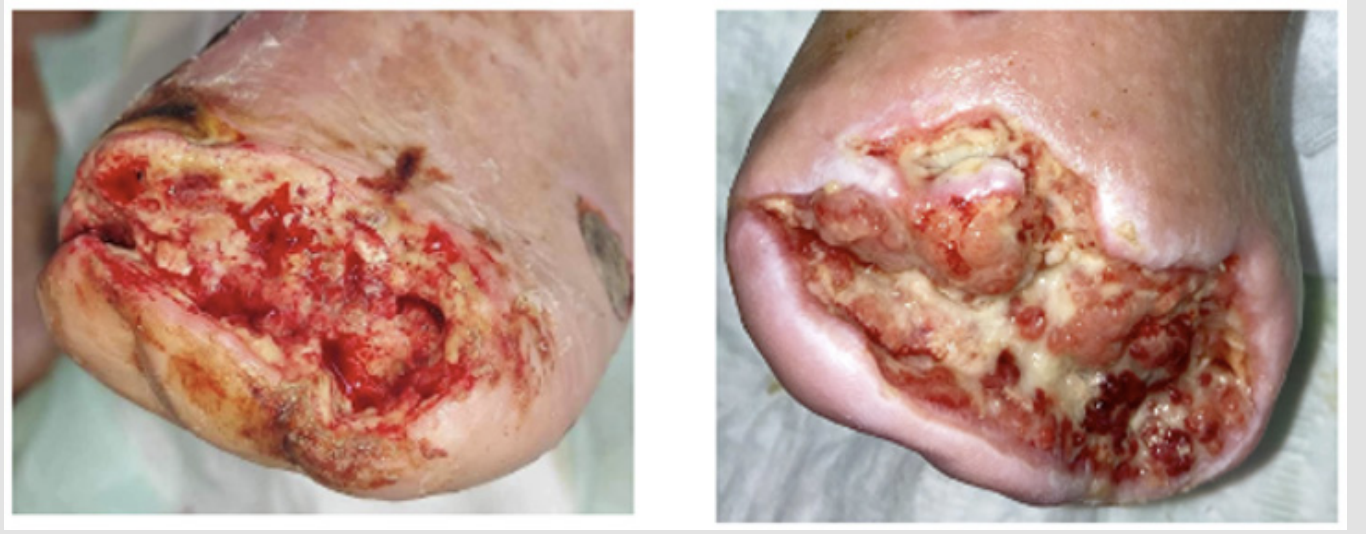
The 81-year-old female patient has a history of hypertension. The severity of aortic and mitral stenosis requires surgery. Due to gangrene of the fingers of both legs, first left superficial femoral artery stent-PTA, then femoro-crural bypass surgery, on the right side femoropopliteal (I) bypass surgery was performed. Amputation of the left forefoot became necessary. For cardiological reasons, continuous bacteriological sampling of the patient's wound was performed. Despite targeted intravenous antibiotic treatment, Pseudomonas aeruginosa, ESBL-producing Klebsiella pneumoniae, Morganella morganii, Enterococcus faecalis pathogens were cultured in the wound. One week after the use of Abilar®, it was observed that the pathogens cultured had changed to Staphylococcus epidermidis, Enterococcus faecalis and Morganella morganii. Two weeks after treatment, granulation of the wound bed has started, and the wound bed is clearing. After a month the change is impressive.

Forefoot amputation wound due to arterial occlusion and gangrene, and 1 month later

Forefoot amputation wound due to arterial occlusion and gangrene, and 1 month later.

Reference Tímea Hevér. Initial Experience with Norway Spruce (Picea Abies) Resin. Biomed J Sci & Tech Res. 2024;57(4). doi:10.26717/BJSTR.2024.57.009043